
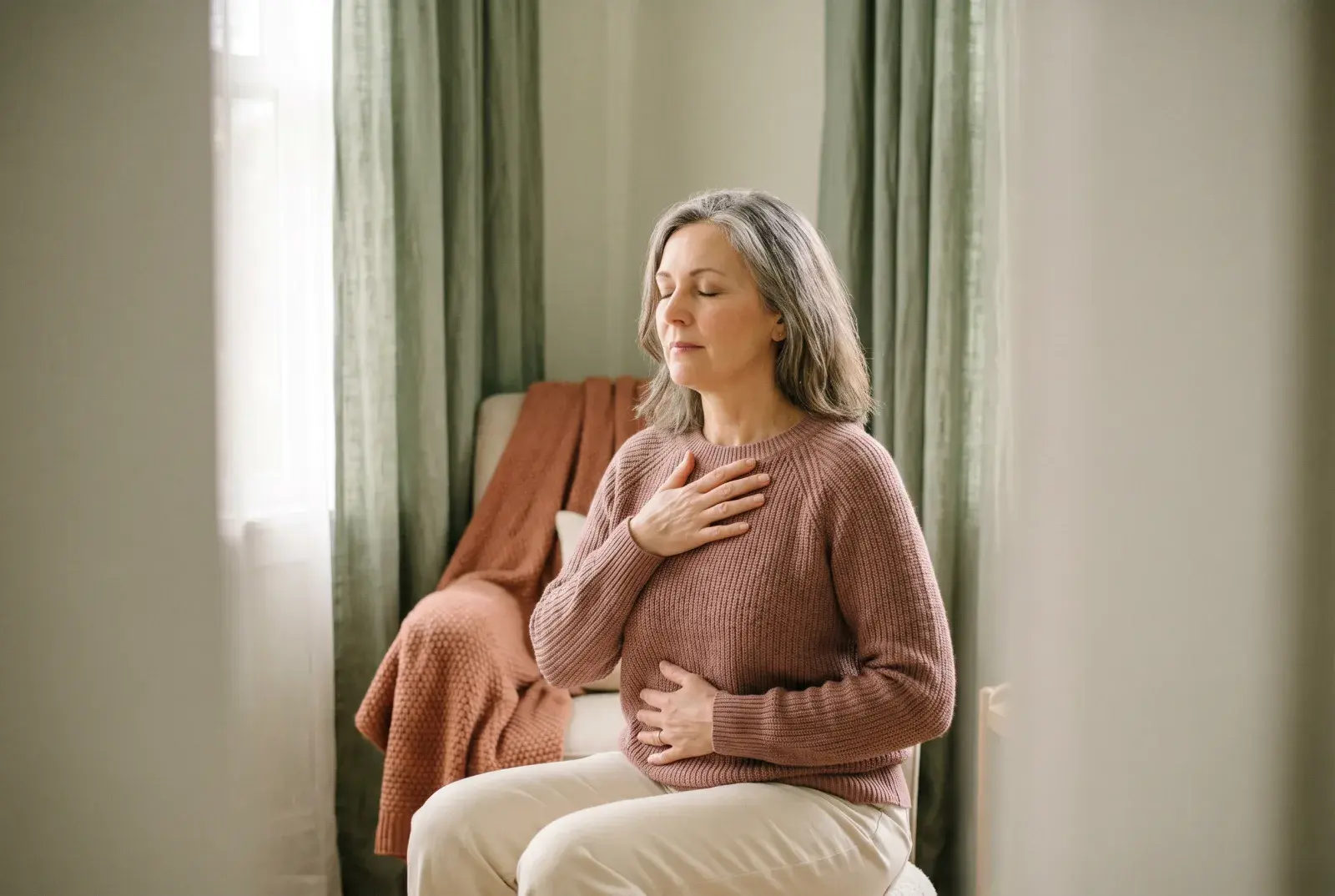
When everything feels like too much, you do not always have time for a long walk, a therapy session, or a weekend away. But you always have your breath, and your breath is one of the most powerful, immediate tools you have for shifting how you feel. This is the quiet magic of breathwork. With nothing but a few intentional minutes, you can signal safety to a nervous system that has been on high alert for years.
For women in midlife especially, who so often carry chronic stress in their bodies, learning a simple breathwork practice can be genuinely life-changing. Let me show you how it works and give you a practice you can use today.
What breathwork actually is
Breathwork simply means using conscious, intentional breathing to influence how you feel in your body and mind. It is not mystical or complicated. It works because of a direct, physical connection between your breath and your nervous system.
Your autonomic nervous system has two main branches. One, the sympathetic, is your accelerator, the fight-or-flight response. The other, the parasympathetic, is your brake, the rest-and-restore response. The way you breathe directly influences which one is in charge. Fast, shallow, upper-chest breathing tends to activate the accelerator. Slow, deep breathing, especially with a long exhale, activates the brake. In other words, you can deliberately calm your own nervous system through your breath, on demand. That is the whole foundation of breathwork.
Why it matters so much for women in midlife
If you spent decades as the emotional anchor of your home, absorbing everyone's stress while pushing through your own exhaustion, your nervous system has very likely been stuck in a low-grade state of alert for a very long time. You may not even register it anymore, because it has become your normal.
That chronic activation takes a real toll, on your sleep, your mood, your energy, and your body. Breathwork offers a direct way to interrupt the pattern and teach your system how to come back to calm. Practiced regularly, it does not just help in the moment. It gradually shifts your baseline, so steadiness becomes easier to find. This is closely related to heart coherence, the smooth, balanced state that conscious breathing helps create.
A simple breathwork practice to begin with
Here is a gentle, beginner-friendly practice you can do almost anywhere. It is sometimes called coherent or balanced breathing.
- Settle in. Sit comfortably, with your spine reasonably upright. You can close your eyes or soften your gaze. Place a hand on your belly if it helps you feel your breath.
- Breathe in slowly through your nose for a count of about five seconds, letting the breath fill down into your belly rather than staying high in your chest.
- Breathe out slowly, also for about five seconds, gently and without forcing.
- Continue this even rhythm, roughly five seconds in and five seconds out, for three to five minutes. If five seconds feels like a strain, use whatever slow, comfortable count works for you.
That is it. The long, slow exhale is the key. If you want to deepen the calming effect, make your exhale slightly longer than your inhale, for example four seconds in and six seconds out. Even a single minute can take the edge off a hard moment, and a few minutes a day builds lasting steadiness over time.
A gentle word on safety
Breathwork is generally very safe, and the slow, gentle practice above is suitable for almost everyone. That said, please use common sense. If you feel lightheaded, simply return to normal breathing. If you are pregnant, or if you have a serious heart, respiratory, or psychiatric condition, or a history of trauma that breath practices can stir up, talk with your doctor before beginning, and consider working with a qualified facilitator. Some more intense forms of breathwork are best learned with guidance. This article is educational and is not medical advice.
Your breath is always with you
What I love most about breathwork is that it asks nothing of you that you do not already have. No equipment, no membership, no special conditions. Just a few minutes and your own breath, available in the school pickup line, before a hard conversation, in the quiet of the empty house, or in the middle of a sleepless night.
For a woman who has spent years giving everything to everyone else, this is a small, profound act of coming home to yourself. A few conscious breaths is you, telling your own body, I am here, and I am safe, and I am going to take care of you now. That is where so much of the deeper work begins.
Frequently asked questions
What is breathwork and how does it work?
Breathwork is the use of conscious, intentional breathing to influence your nervous system. Slow, deep breathing with a long exhale activates the body's rest-and-restore response, calming you, while fast, shallow breathing tends to activate stress. By changing how you breathe, you can directly change how you feel.
What is a good breathwork practice for beginners?
A simple, safe option is coherent breathing: breathe in slowly through your nose for about five seconds and out for about five seconds, in an even rhythm, for three to five minutes. Making the exhale slightly longer than the inhale deepens the calming effect.
Can breathwork help with anxiety and stress?
Yes. Slow, intentional breathing is one of the fastest ways to calm an activated nervous system and ease stress and anxiety in the moment. Practiced regularly, it can also lower your overall baseline of tension. It is a helpful tool and not a replacement for professional care when needed.
Is breathwork safe?
Gentle, slow breathwork is safe for most people. If you feel lightheaded, return to normal breathing. If you are pregnant or have a serious heart, respiratory, or psychiatric condition, or a trauma history, consult your doctor first and consider working with a qualified facilitator.
Practice in good company
- Join The Oasis, my free community where we practice breathwork and meditation together.
- Download The Clarity Guide for a gentle first step into this work.
- When you want the full path, explore The Divine Plan for a Life You Love or book a free discovery call.
Related reading: What Is Heart Coherence? and How to Fill Your Own Cup.
Jenny Warner is a Certified Life Coach and breathwork facilitator who works with women 45 to 60. This article is educational and is not a substitute for medical advice.