
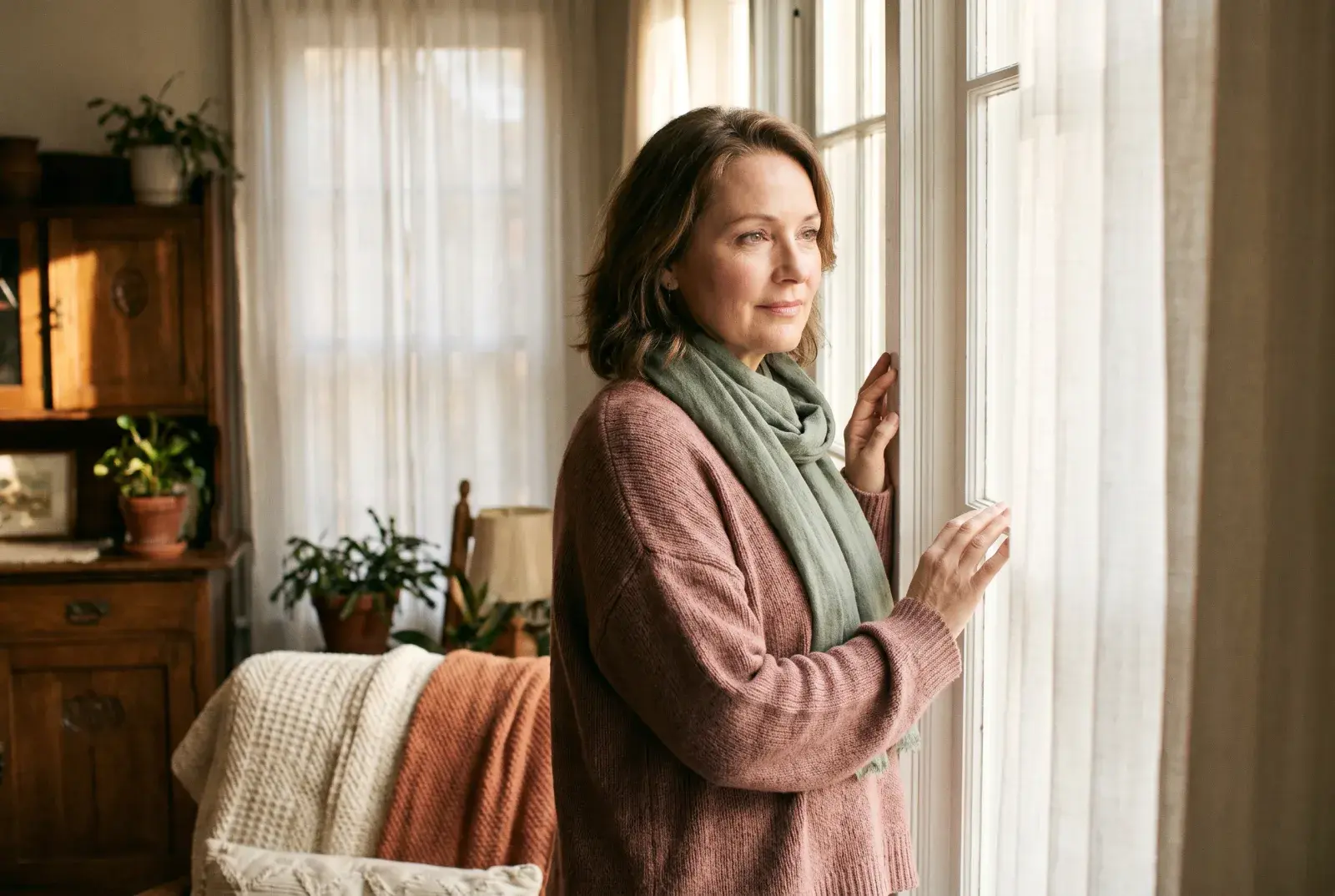
It can sneak up on you. The way a clerk looks past you to help someone younger. The meetings where your idea lands only when a man repeats it. The strange realization that the world, which once seemed to notice you, has quietly stopped. Many women describe it the same way: somewhere in midlife, they began to feel invisible.
If this is you, please know two things. First, you are not imagining it, and you are not alone. The feeling of invisibility in midlife is real and widely shared. Second, it is not the end of your relevance. It can actually be the beginning of a deeper, truer kind of visibility, the kind that starts from the inside. Let's look at why it happens and how to feel seen again.
Why women feel invisible in midlife
The invisibility is not in your head, and it is not a personal failing. It comes from a few directions at once.
Culturally, we live in a world that has tied a woman's value, especially her visibility, to youth and to her usefulness to others. As you move past your 40s, the particular kind of attention the culture trained you to expect begins to fade. At the same time, your most visible roles often shift. If you spent years as the indispensable mother, the empty nest can remove the very role through which others saw and needed you. The combination can feel like quietly disappearing.
It helps to name what is really happening. You are not becoming less. The narrow, conditional spotlight that the culture shines on women is simply moving off you. That is a loss worth grieving, and, as we will see, it is also a strange kind of freedom.
The grief underneath the invisibility
Before we get to the freedom, let's honor the grief, because it is real. Feeling invisible can bring a quiet ache: a sense of being overlooked, of no longer mattering in the way you used to, of fading from a story you were once central to. For women who spent years being needed, this can stir up deeper questions of worth and purpose. It is closely related to the midlife crisis in women, that broader sense of unmooring.
You do not have to rush past this feeling or pretend it does not sting. Let yourself grieve the visibility you are losing. Grief that is felt can move, and on the other side of it is something far more solid than the attention you are mourning.
The unexpected freedom in being unseen
Here is the reframe that changes everything. The visibility you are losing was never really yours. It was conditional. It depended on being young enough, useful enough, pleasing enough, attractive enough by someone else's measure. It came with a cage.
When that conditional spotlight moves off you, something remarkable becomes possible. You are no longer performing for a gaze that never served you. You can stop contorting yourself to be seen on terms that were never about who you actually are. Many women find that this is precisely when they begin to live for themselves, dress for themselves, speak for themselves, and become, for the first time, gloriously unconcerned with being watched. Invisibility, it turns out, can be the doorway to freedom.
How to feel truly seen again
Real visibility does not come from chasing the old spotlight. It comes from a different direction.
- Become visible to yourself first. Start paying close attention to your own life, your own wants, your own inner world. The most important pair of eyes that needs to see you is your own. So much of feeling invisible is really a sign that you have stopped seeing yourself.
- Stop performing and start expressing. There is a difference between trying to be seen and letting yourself be known. Speak your honest opinion. Wear what you love. Let people meet the real you. Authenticity has a presence that performance never does.
- Choose to be witnessed by people who truly see you. Surround yourself with those who reflect back your depth, not your usefulness. Being genuinely witnessed by women who get it is one of the most healing experiences there is.
- Take up your space on purpose. Invisibility often becomes a habit of shrinking. Practice the opposite, gently. Speak up. Step forward. Let yourself be a full presence in the room.
For the deeper journey underneath all of this, see how to find yourself again.
Visible on your own terms
You are not fading. You are being released from a story that was always too small for you. The visibility worth wanting is not the conditional kind that the culture grants and revokes. It is the kind that radiates from a woman who knows exactly who she is and is no longer asking permission to be seen.
That woman is not invisible. She is unmistakable. And she has been waiting, underneath all the years of being needed and watched and measured, for you to finally see her, and become her.
Frequently asked questions
Why do I feel invisible in midlife?
The feeling usually comes from a culture that ties a woman's visibility to youth and usefulness, combined with shifting roles like the empty nest that once made you central to others. It is real and widely shared, and it reflects a moving spotlight, not a loss of your actual worth.
Is feeling invisible as a woman over 50 normal?
Yes, it is extremely common and well documented. Many women notice it in their late 40s and 50s. Naming it helps, because it reveals that the invisibility is cultural and situational, not a personal failing.
How do I stop feeling invisible?
Begin by becoming visible to yourself, paying real attention to your own wants and inner life. Stop performing and start expressing your authentic self, choose people who truly see you, and practice taking up your space on purpose. Real presence comes from authenticity, not from chasing the old spotlight.
Can feeling invisible actually be a good thing?
It can become one. The visibility you lose was often conditional and confining. Being released from it can free you to live for yourself rather than for others' approval, which many women experience as a profound and unexpected liberation.
Be seen, starting with yourself
- Download The Clarity Guide, my free first step for women coming home to themselves.
- Join The Oasis, a free community of women who truly see one another.
- When you want a structured path, explore The Divine Plan for a Life You Love or book a free discovery call.
Related reading: Midlife Crisis in Women and How to Find Yourself Again.
Jenny Warner is a Certified Life Coach who works with women 45 to 60 navigating the midlife identity shift, integrating HeartMath research on heart coherence, somatic practice, and the divine-feminine lineage into a grounded path she calls the Frequency Anchor.