
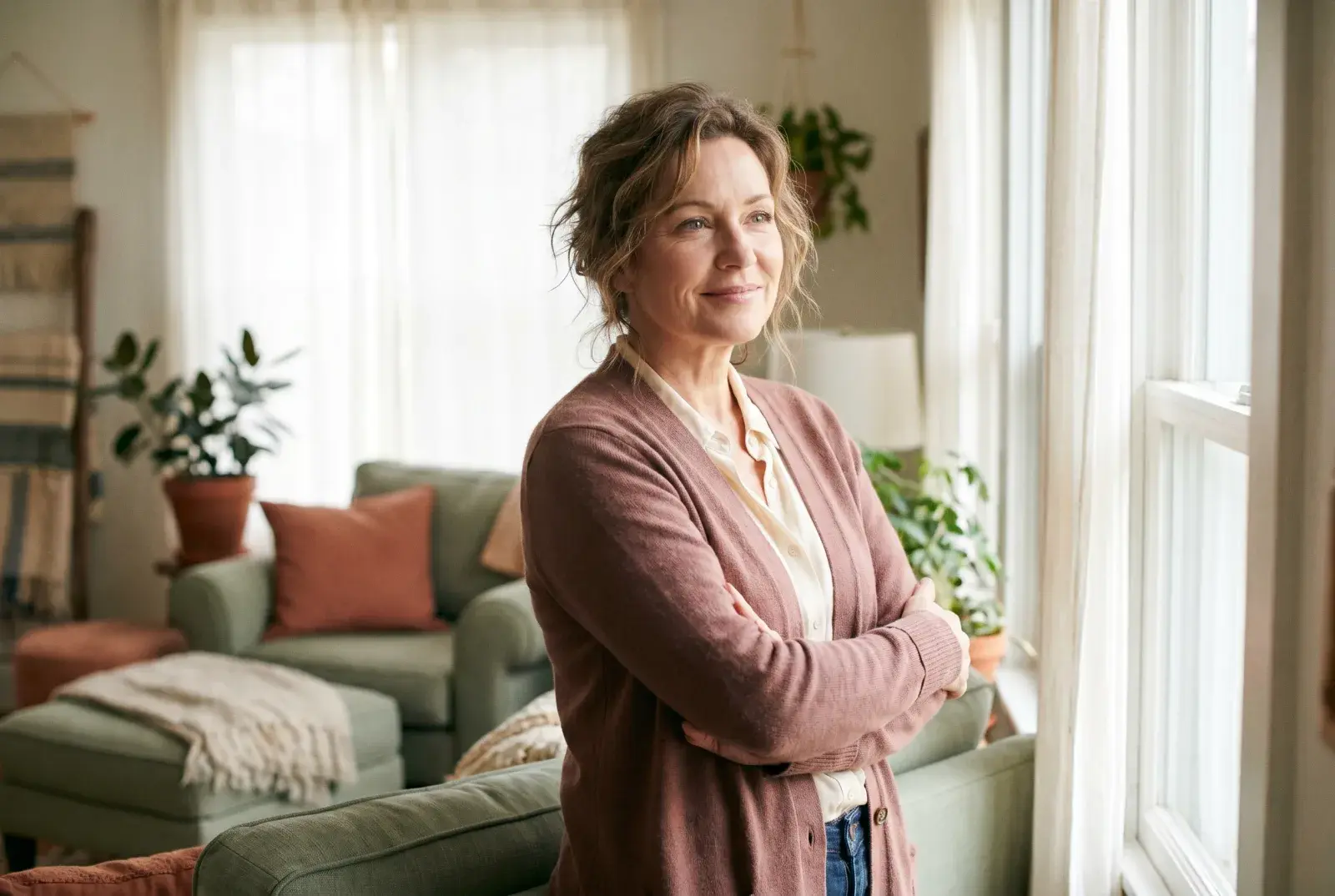
For eighteen years or more, you knew exactly who you were. You were Mom. The word held your days together and gave your life an unmistakable shape. Then the last child packs up, the door closes, and in the quiet that follows comes a question that can take your breath away: if I am not doing this anymore, who am I?
If your kids have left home and you feel lost, unmoored, or strangely invisible, you are not having a breakdown and you did not do anything wrong. You poured yourself, completely, into one of the most demanding and meaningful roles there is. Of course it leaves a mark when that role changes. Finding yourself after the kids leave home is real work, and it is some of the most worthwhile work you will ever do. Here is where to begin.
Why losing the kids can feel like losing yourself
The ache of the empty nest is not only about missing your children, though you will. It is about identity. For most mothers, the role of caretaker did not just fill the calendar. It became woven into the sense of self. Who you are and what you do braided together so completely that when the doing falls away, the being can feel like it goes with it.
This is the deeper layer of empty nest syndrome. It is also why "just find a hobby" never quite works. You are not looking for something to fill the time. You are looking for yourself. And the good news, the news almost no one tells you, is that she is not gone.
You did not lose yourself. You set her aside.
The woman you are trying to find did not vanish in the school runs and the years of putting everyone else first. She has been here the whole time, waiting, quietly growing up while you gave yourself to your family. She is no longer the version she was before children, and she is not supposed to be. She is wiser, deeper, and more herself than ever, if you will give her room to step forward.
So this is not about going backward to who you used to be. It is about gathering everything you have become and letting a truer you emerge. You are not reverting. You are arriving.
How to start finding yourself again
These are gentle first steps you can take starting today, without announcing anything to anyone.
- Let yourself grieve the role. You are allowed to miss being needed in the old way. Grief that is felt can move. Grief that is denied just sits and waits.
- Get quiet enough to hear yourself. After years tuned to everyone else's needs, your own voice can be faint at first. A few minutes of daily stillness begins to bring it back.
- Reclaim what was yours. What did you love before motherhood took center stage? Some of yourself is waiting exactly where you left it, in an old interest, a talent, a dream you shelved.
- Follow small sparks. You do not need a new identity by Friday. Follow whatever makes you lean in, even slightly, and let it lead.
- Tend your own body and heart. Slow breathing, rest, and small pleasures that belong only to you begin to restore the reserves you have been running without.
- Find women who understand. There is real relief in being witnessed by others walking this exact passage. Isolation keeps you stuck. Being seen helps you remember who you are.
For a fuller path, see how to find yourself again, and for the question of meaning underneath it all, finding purpose in midlife.
A new kind of relationship with your child
Here is something tender and important. Finding yourself again is not a betrayal of your children or of the years you gave them. It is, in fact, one of the greatest gifts you can offer them now.
When you come home to yourself, you stop needing your children to be your whole purpose, which frees them to launch fully and frees you to relate to them as the adults they are becoming. The relationship does not end when they leave. It matures into something new, two adults who love each other, rather than a mother and the children who needed her. Reclaiming yourself is part of how that healthier closeness gets built.
From anchor of the home to anchor of your own life
For two decades, you were the emotional anchor of your home, steadying everyone, often at the cost of your own depletion. The invitation now is to turn that same devotion toward yourself, to become the anchor of your own life, grounded in your own fullness.
That is what finding yourself after the kids leave home really means. Not filling the silence, but inhabiting it. Not replacing the role, but discovering the woman who was always underneath it. She is worth finding, and this quiet, aching season is exactly how you find her.
Frequently asked questions
Why do I feel lost after my kids left home?
Because for years your identity was woven together with the role of caretaker. When that role changes, the sense of self that was braided into it can feel like it goes too. The lost feeling is an identity shift, not a sign of failure, and the self underneath is still there.
How do I find myself again after being a stay-at-home mom?
Begin by grieving the old role, getting quiet enough to hear yourself, and reclaiming interests and talents you set aside. Follow small sparks of curiosity, tend your body and heart, and connect with women walking the same path. Small, consistent steps matter more than dramatic change.
Is it normal to have an identity crisis when your child leaves home?
Yes, it is very common. The empty nest often triggers a midlife identity shift, especially for mothers whose sense of self was closely tied to caregiving. With care, it becomes a doorway into a more authentic chapter.
Will focusing on myself hurt my relationship with my kids?
No. Coming home to yourself frees your children to launch fully and frees you to relate to them as adults. It usually deepens the relationship rather than harming it.
Come home to yourself
- Download The Clarity Guide, my free first step for mothers finding their way back.
- Join The Oasis, a free community of women rediscovering who they are after motherhood.
- When you want a structured path, explore The Divine Plan for a Life You Love or book a free discovery call.
Related reading: How to Find Yourself Again and Empty Nest Syndrome.
Jenny Warner is a Certified Life Coach who works with women 45 to 60 navigating the empty nest and the midlife identity shift, integrating HeartMath research on heart coherence, somatic practice, and the divine-feminine lineage into a grounded path she calls the Frequency Anchor.