
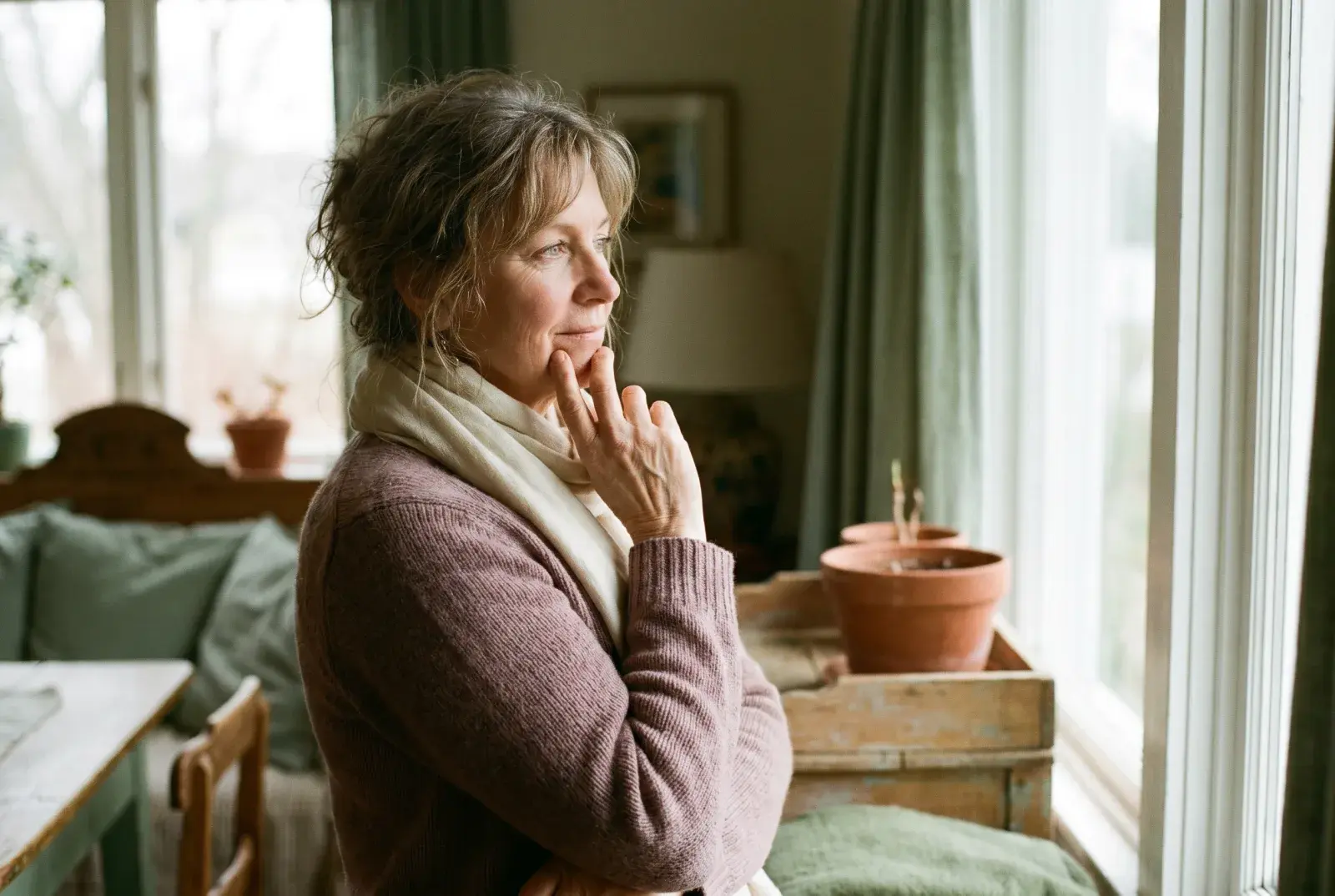
Say the words "midlife crisis" and most people picture a man buying a sports car. That cliche has done women a real disservice, because a midlife crisis in women rarely looks like that. It is usually quieter, more inward, and far easier to dismiss. It can look like a successful woman who has everything she worked for, lying awake at night wondering why she feels so empty.
If you have been feeling restless, unmoored, or quietly certain that something needs to change, you are not having a breakdown. You may be standing at one of the most important thresholds of your life. Let's look at what a female midlife crisis actually is, and why it might be the best thing that has happened to you in years.
It is not a crisis. It is a calling.
The word "crisis" suggests something is malfunctioning. But wanting more meaning, more honesty, and more of yourself in your own life is not a malfunction. It is a natural developmental stage, and it tends to arrive right on schedule.
For years, your identity had a job. You were someone's mother, someone's partner, the dependable one who held it all together. Those roles are real, but they are not the same as your self. Somewhere in midlife, often as the children grow and leave, the self you set aside to serve those roles starts to make itself known again. The restlessness is that self, waking up. I find it far more accurate to call this a midlife identity shift than a crisis. It is less an emergency and more an invitation.
What a midlife crisis looks like in women
Because it rarely matches the cliche, women often do not recognize what they are experiencing. It can show up as:
- A persistent sense that something is missing, even when your life looks good on paper
- Restlessness or boredom you cannot quite explain
- A longing for meaning, purpose, or a sense of aliveness you have lost touch with
- Grief about time passing, or about who you did not get to become
- Questioning choices, relationships, or a career you once felt sure about
- A pull to do something different, paired with fear that it is too late or too selfish
- Feeling invisible, as though the world has quietly decided you are past your prime
If several of these feel familiar, you are in good and very large company. This is one of the most common, and most misunderstood, passages in a woman's life.
Why it tends to surface now
A few forces converge in midlife. The active years of caregiving wind down, freeing up attention you have not had to yourself in decades. You hit milestone birthdays that make time feel more real. Your body changes. And you have accumulated enough life to start asking deeper questions about what it has all been for.
It can feel destabilizing, but there is a gift hidden in the timing. You are arriving at these questions with something you did not have at 25: real self-knowledge, and a growing freedom to act on it. That combination is not the setup for decline. It is the setup for the most authentic chapter of your life.
How to move through it well
The women who move through this passage with grace are not the ones who ignore it or the ones who blow up their lives in a panic. They are the ones who treat it as a doorway and walk through on purpose. A few starting points:
- Stop pathologizing the feeling. You are not broken. Let the restlessness be a messenger rather than a malfunction.
- Get quiet enough to listen. The answers are quieter than the noise of daily life. Even a few minutes of stillness a day begins to clear the static.
- Follow the small sparks. You do not need a grand plan, just a thread of curiosity to pull on.
- Resist the urge to torch everything. The most lasting change in midlife is usually quiet and sustainable, not explosive. You can become far more yourself without burning down your life.
- Do not go it alone. Being witnessed by women walking the same passage changes the experience entirely.
My piece on how to find yourself again walks this path in more detail, and reinventing yourself at 50 looks at the chapter on the other side of it.
The most alive you have ever been
Here is what I want you to know. Handled with care, a midlife crisis in women is not the beginning of a decline. It is the beginning of a return. It is the self you set aside, finally ready to be reclaimed, asking for room to lead.
You spent the first half of your adult life anchoring everyone else. This restless, aching, hopeful season is the invitation to become the anchor of your own life, grounded in your own fullness. That is not a midlife crisis. It is a midlife awakening, and it might be the most alive you have ever felt.
Frequently asked questions
What does a midlife crisis look like in a woman?
It rarely matches the cliche. In women it usually shows up quietly: a persistent sense that something is missing, restlessness, a longing for meaning, questioning long-held choices, and sometimes feeling invisible, even when life looks good on the outside.
What age does a midlife crisis happen in women?
It most often surfaces between the mid-40s and late 50s, frequently as children grow and leave home, as milestone birthdays arrive, and as the body changes. There is no exact age, and it can come earlier or later.
Is a midlife crisis in women a bad thing?
Not at all. It is more accurate to think of it as a midlife identity shift than a crisis. Handled with care, it becomes a doorway into a more authentic and purposeful chapter rather than a breakdown.
How do I get through a midlife crisis without ruining my life?
Stop treating the feeling as a malfunction, get quiet enough to hear yourself, follow small sparks of curiosity, resist the urge to blow everything up, and surround yourself with women who understand. The most lasting change is usually quiet and sustainable.
Ready to turn the restlessness into a real chapter?
- Download The Clarity Guide, my free first step for women in this exact passage.
- Join The Oasis, a free community of women rediscovering who they are.
- When you want a structured path, explore The Divine Plan for a Life You Love or book a free discovery call.
Related reading: How to Find Yourself Again and Reinventing Yourself at 50.
Jenny Warner is a Certified Life Coach who works with women 45 to 60 navigating the midlife identity shift, integrating HeartMath research on heart coherence, somatic practice, and the divine-feminine lineage into a grounded path she calls the Frequency Anchor.